
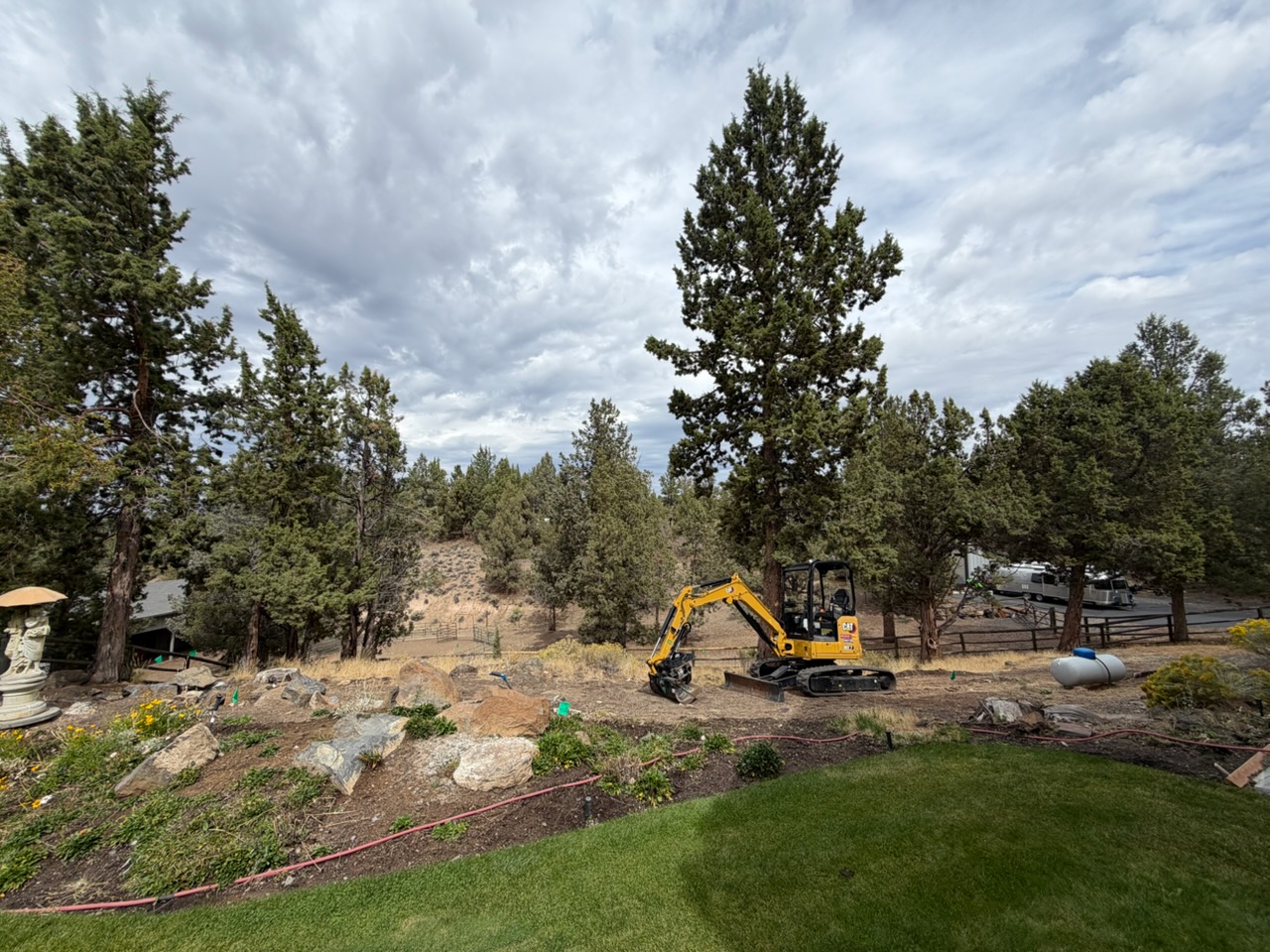
Overgrown land is common across Central Oregon. Juniper, sagebrush and bitterbrush fill in fast when a property sits untouched, and before long trails disappear, fences are swallowed and the ground becomes hard to use or even walk.
This guide explains how property clearing works, from deciding what to keep to handling debris. If you're ready for help now, take a look at our brush clearing services or our full property clearing options for Bend, Redmond, Sisters and the surrounding area.
Why Central Oregon Properties Become Overgrown
A few regional factors make overgrowth especially common here:
- Western juniper spreads readily into open ground and has expanded across much of Central Oregon
- Sagebrush, bitterbrush and rabbitbrush fill in quickly on undisturbed land
- Many parcels are purchased years before building, so vegetation goes unmanaged
- Without regular fire or grazing, young trees and brush build up beneath mature pines
- Storms and snow loads leave downed limbs and dead material behind
Selective Clearing vs. Complete Clearing
Selective clearing removes only what you don't want. Complete clearing removes everything in a defined area. Most Central Oregon properties use a mix of both.
| Selective Clearing | Complete Clearing | |
|---|---|---|
| What is removed | Brush, small trees, dead material, chosen trees | All vegetation, stumps and roots |
| What remains | Healthy, well-spaced trees and ground cover | Bare, workable soil |
| Typical goal | Usability, views, fuel reduction, recreation | Building, driveways, arenas, gardens |
| Common method | Forestry mulching, hand work | Excavator, tree removal, hauling |
Clearing Juniper, Brush and Unwanted Trees
Juniper removal
Juniper is often the main target on Central Oregon properties. Smaller trees can be mulched in place. Large junipers may be felled and processed, and stumps can either be ground down or excavated depending on what the ground will be used for.
Underbrush and shrubs
Underbrush clearing focuses on the dense layer beneath and between trees. Removing it opens up the property, improves visibility and access, and reduces fuel for wildfire, which is why it often overlaps with defensible space work.
Tree clearing
Dead, leaning or crowded trees are usually removed as part of a larger clearing project. For a breakdown of what drives tree removal pricing, see our tree clearing cost guide.
Access, Terrain, Debris and Environmental Considerations
Machinery access
Gate width, driveway condition and overhead clearance all affect what equipment can reach the work area. Compact machines can work in tighter spaces, while larger equipment covers open acreage faster.
Terrain and rock
Lava rock, basalt outcrops and steep slopes are common in parts of the region. They slow work, limit equipment choices and sometimes require hand work near obstacles.
Debris disposal
Mulching on site is usually simplest. Hauling and chipping are options when you want a clean finish. Burning is restricted during fire season and requires checking with your local fire district.
Environmental care
Soil left bare can blow or wash away. Mulch layers, minimizing heavy disturbance and leaving healthy native ground cover all help. Take extra care near creeks, irrigation ditches and wetlands, where additional rules may apply.
When Is Forestry Mulching the Right Choice?
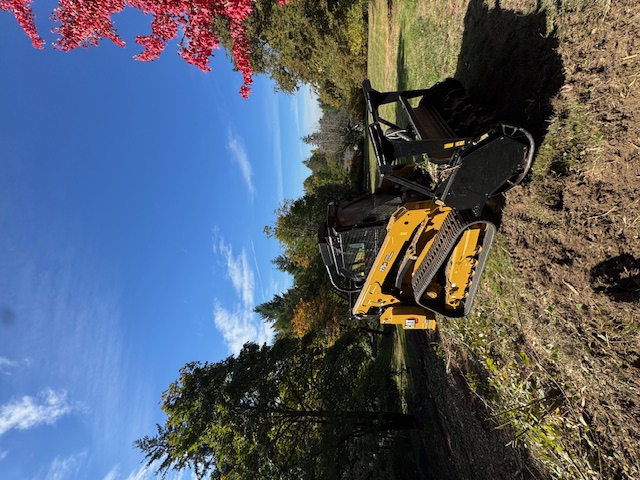
Forestry mulching is a strong fit when you want to reduce brush and small trees, keep the trees that matter, and avoid piles of slash. It is less suitable where stumps and roots must be removed for construction. Learn more on our forestry mulching page.
Property Clearing Preparation Checklist
Before Your Clearing Project
- Confirm your property lines, and mark corners or boundaries if they are unclear
- Flag trees, plants and features you want to keep
- Mark wells, septic tanks and drainfields, irrigation lines and buried utilities you know of
- Call Oregon 811 before any digging or stump excavation so utilities can be located
- Move vehicles, equipment, firewood and stored materials out of the work area
- Make sure gates and driveways are open and wide enough for equipment
- Decide how you want debris handled: mulched, chipped, hauled or burned where allowed
- Check HOA or subdivision rules if they apply to your property
What Affects a Property Clearing Quote?
Every property is different, so quotes are based on the specifics of your land, including:
- Total area to be cleared and how much is selective vs. complete clearing
- Vegetation type and density, and the size of the largest trees
- Whether stumps are ground or excavated
- Terrain, rock and slope
- Equipment access to the site
- How debris will be handled
The fastest way to get an accurate number is a site visit. Our land clearing cost guide explains these factors in more depth.
Let's Clear Your Overgrown Property
From brush and underbrush clearing to full land clearing, Byrd Land Co. helps property owners across Central Oregon. Call or message us to discuss your project in Bend, Redmond, Sisters or nearby.
Frequently Asked Questions
How long does it take to clear an overgrown property?
It depends on acreage, vegetation density, tree size, terrain and how debris will be handled. A small residential lot with brush can often be done in a day or two, while larger juniper-covered acreage can take longer. A site visit gives you a realistic timeline.
Can you clear around trees I want to keep?
Yes. Selective clearing removes brush, small trees and dead material while protecting the trees you choose to keep. Marking those trees with flagging tape before work begins helps make sure everyone is on the same page.
What happens to all the brush and trees after clearing?
Options include mulching it in place, chipping it, hauling it away, or burning it where and when local rules allow. Mulching is common because it avoids hauling and protects the soil.
Do I need a permit to clear my land in Central Oregon?
Routine vegetation clearing on private land often does not require a permit, but rules vary by location. Work near waterways, in some subdivisions, or as part of construction may have requirements. Check with your city or county planning office, and with your fire district before any burning.