
If your Central Oregon property is choked with juniper, sagebrush or bitterbrush, there are two main ways to deal with it: grind it in place with a forestry mulcher, or cut, pile and haul it away with traditional land clearing. Both work. The right choice depends on what you plan to do with the ground afterward.
This guide compares the two methods side by side so you can make an informed decision before calling a land clearing contractor. If you already know you want vegetation ground down and left as mulch, our forestry mulching services page covers what we do in Bend, Redmond, Sisters and the surrounding area.
What Is Forestry Mulching?
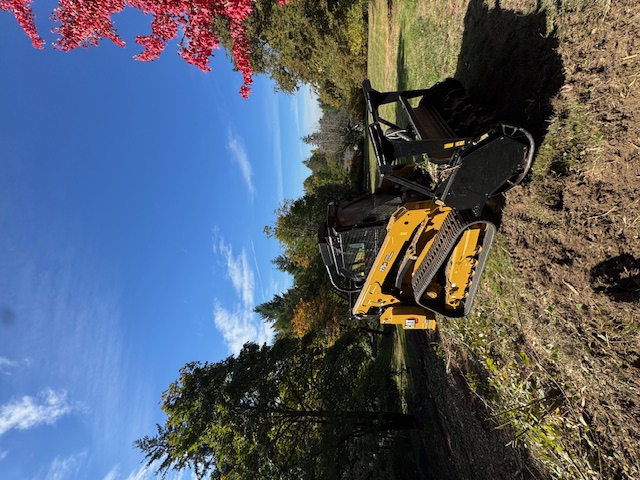
Forestry mulching uses a single machine, usually a compact track loader or excavator fitted with a rotating drum of carbide teeth, to grind standing trees, brush and stumps into wood chips in one pass. The mulch stays on site as a ground layer.
Because nothing is piled or hauled, mulching is efficient for thinning overgrowth, opening up acreage and reducing fuel loads. It also leaves the soil mostly undisturbed, which matters on the loose, pumice-rich soils found across much of Deschutes County.
What Is Traditional Land Clearing?
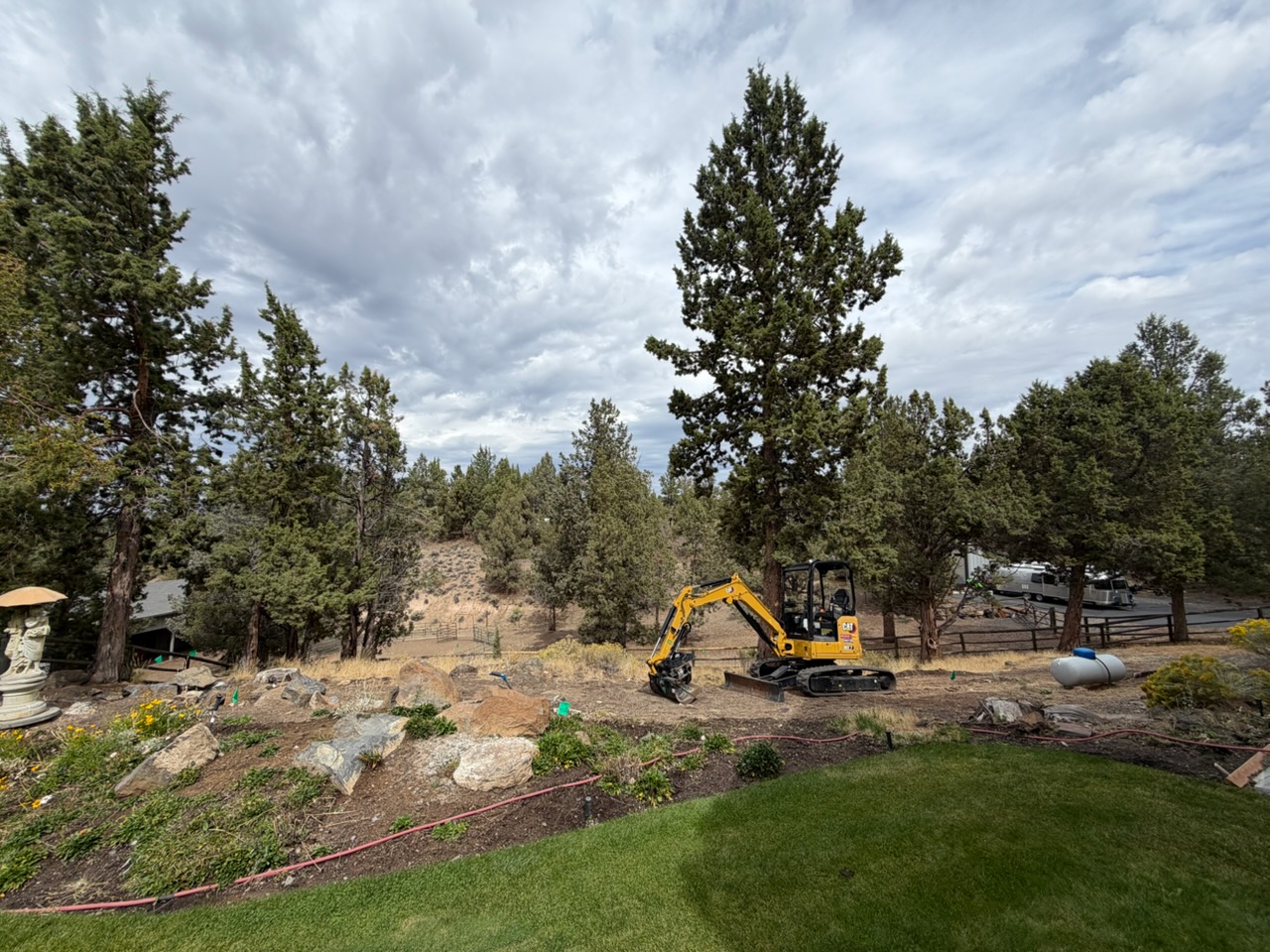
Traditional land clearing is a multi-step process. Trees are felled, brush is cut, stumps and roots are pulled with an excavator or dozer, and the debris is piled, chipped, burned where permitted, or hauled off. The result is bare, workable ground.
This approach is slower and generates more debris to manage, but it is the right method when you need soil exposed and roots removed, for example under a future foundation, driveway, shop or septic drainfield.
Forestry Mulching vs. Land Clearing: Side-by-Side Comparison
The short answer: mulching is usually best for managing vegetation you want to reduce, and traditional clearing is usually best for ground you want to build on. The table below breaks down the details.
| Factor | Forestry Mulching | Traditional Clearing |
|---|---|---|
| Equipment | One machine with a mulching head | Saws, excavator or dozer, plus hauling equipment |
| Debris | Ground into mulch and left on site | Piled, chipped, burned where allowed, or hauled away |
| Stumps and roots | Ground to about ground level; roots stay | Pulled out of the soil |
| Soil disturbance | Low; mulch layer helps limit erosion | High; soil is exposed and reworked |
| Selective work | Well suited to keeping chosen trees | Possible, but usually used for full clearing |
| Best for | Fuel reduction, acreage, trails, pasture recovery | Homesites, driveways, foundations, septic areas |
How Central Oregon Vegetation Affects the Choice
Western juniper
Western juniper has expanded across much of Central and Eastern Oregon over the past century, crowding out grasses and drawing heavily on limited soil moisture. Small to mid-size juniper mulches well. Large, old trees with wide trunks may need to be felled first, and if the ground will be built on, the stumps should be excavated rather than ground.
Sagebrush, bitterbrush and rabbitbrush
These shrubs are ideal mulching material. A mulcher can reduce dense patches quickly, leaving a mat that protects bare soil from wind erosion during the dry months.
Ponderosa pine
On properties around Sisters, west Bend and the forested edges of Redmond, owners often want to keep mature ponderosa pine and remove the thickets of young trees and brush beneath them. That kind of selective thinning is one of the strongest use cases for forestry mulching.
Which Method Fits Your Property?
Residential acreage (1 to 5 acres)
Most owners of rural residential lots want to open up views, improve access and reduce wildfire fuels while keeping healthy trees. Forestry mulching is usually the better fit, and it pairs naturally with defensible space work around the home.
Larger properties and ranch ground
On bigger parcels, mulching is often used to reclaim pasture from juniper encroachment and to build fuel breaks along roads and fence lines. Areas planned for barns, arenas or roads can be handled with traditional clearing as part of the same project.
Building site preparation
If a home, shop or driveway is going on the ground, roots and organic material generally need to come out before grading. In that case, traditional clearing followed by site preparation and grading is the usual sequence. Many projects combine both methods: clear the building envelope fully and mulch the rest of the lot.
When Should You Get a Professional Assessment?
An on-site assessment is worth it whenever any of the following apply:
- You plan to build, pour concrete or install a septic system on the cleared area
- The property has steep slopes, rock outcrops or drainage concerns
- There are large trees close to structures, power lines or property lines
- You are unsure which trees should stay for shade, screening or fire resilience
- Your land is near a creek, wetland or other sensitive area that may have local rules
For a sense of how project size and vegetation density affect budgets, see our forestry mulching cost guide and land clearing cost guide.
Get the Right Clearing Method for Your Land
Whether your property needs selective forestry mulching or complete land clearing, Byrd Land Co. can help. Call or message us to discuss your project in Bend, Redmond, Sisters or anywhere in Central Oregon.
Frequently Asked Questions
Is forestry mulching cheaper than traditional land clearing?
Often, but not always. Mulching usually avoids the cost of piling, hauling and disposing of debris, which is a large part of a traditional clearing bill. When a site needs stumps pulled and soil exposed for a foundation, the extra excavation work can narrow or erase that difference. An on-site look is the only reliable way to compare the two for your property.
Can forestry mulching remove juniper trees?
Yes. Forestry mulchers handle most western juniper found on Central Oregon residential and rural acreage. Very large, old junipers may need to be felled first or handled with an excavator, especially if the stump has to come out.
Does forestry mulching remove stumps?
A mulcher grinds stumps down to roughly ground level, but it does not pull roots out of the soil. If you are building, pouring a driveway or installing a septic system on that ground, the stumps and roots usually need to be excavated.
Will the mulch layer become a fire hazard?
A thin, evenly spread mulch layer is generally far less hazardous than the standing brush and ladder fuels it replaces, because it sits on the ground and holds moisture. Deep mulch piles can still smolder, so mulch should be kept away from structures, especially within the first five feet of a home.