
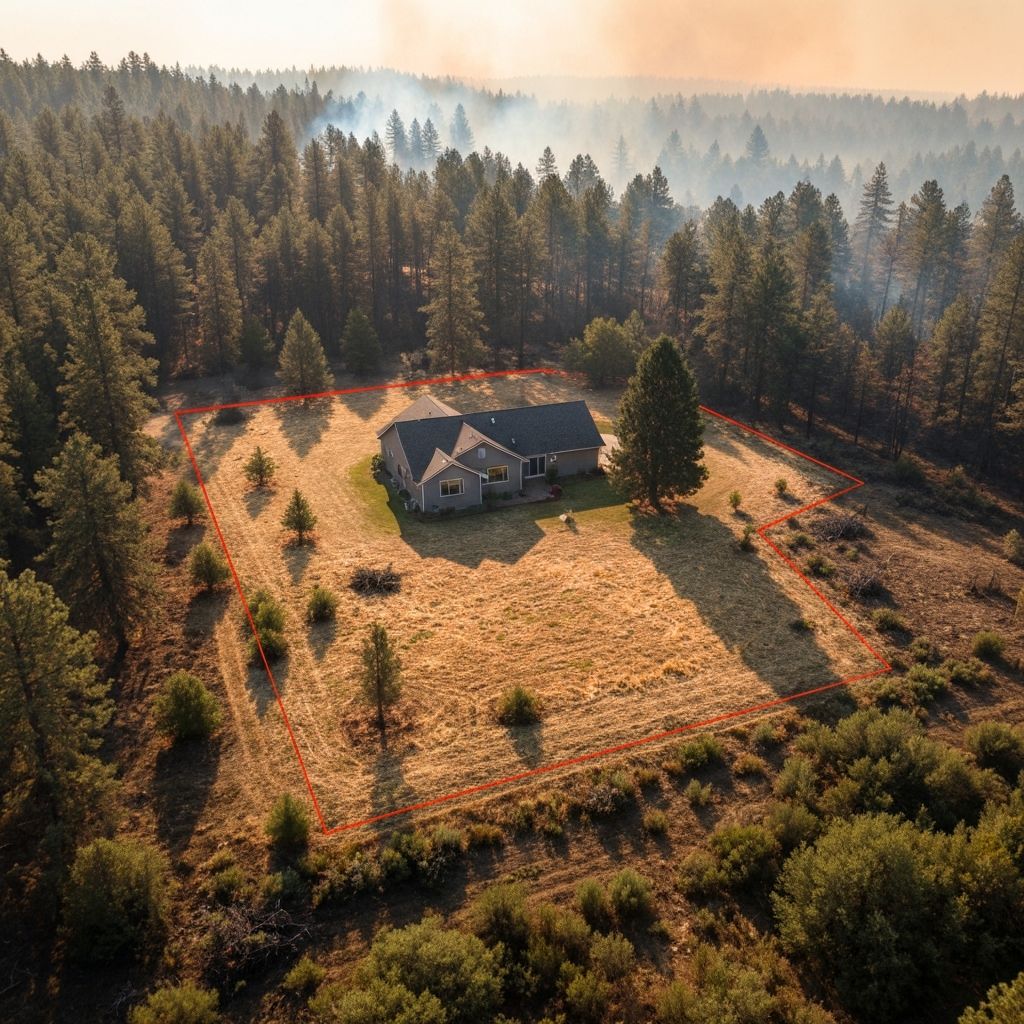
Central Oregon's dry summers, frequent wind and abundant juniper, sagebrush and pine make wildfire a real concern for homeowners from Sisters to Redmond to the outskirts of Bend. Defensible space is one of the most practical things you can do to reduce that risk.
This guide explains what defensible space means, how the zones work under Oregon guidance, and how clearing and mulching fit in. If you would rather have professionals handle it, our defensible space services page outlines how we help Central Oregon property owners.
What Is Defensible Space?
Defensible space is the area around a building where vegetation and other fuels are managed to slow the spread of wildfire and reduce the chance of flames, radiant heat and embers igniting the structure. It also creates a safer area for firefighters to work.
Defensible space does not mean bare dirt. It means separating fuels horizontally (space between plants and trees) and vertically (space between the ground and tree canopies), and keeping what remains healthy and well maintained.
The Three Defensible Space Zones
The Oregon State Fire Marshal (OSFM) describes defensible space in three zones measured outward from your home. The table below summarizes that guidance.
| Zone | Distance | Key Actions |
|---|---|---|
| Immediate zone | 0–5 feet | Keep a noncombustible area using gravel, rock or pavers. Remove flammable plants, bark mulch and debris, including under decks and eaves. |
| Intermediate zone | 5–30 feet | Keep vegetation lean, clean and green. Prune branches back from the structure and space tree canopies apart. |
| Extended zone | 30–100+ feet | Remove dead vegetation and ladder fuels, space tree crowns, and keep grass mowed short. Extend farther on slopes. |
Requirements and recommendations can vary by location and change over time. Always confirm current guidance with OSFM, your local fire district, and, in Deschutes County, Project Wildfire.
Managing Ladder Fuels, Brush and Tree Spacing
What are ladder fuels?
Ladder fuels are low branches, small trees and tall brush that let a ground fire climb into tree canopies. Removing them is one of the most effective ways to keep a fire on the ground, where it is easier to control.
Brush removal
Dense sagebrush, bitterbrush and rabbitbrush carry fire quickly across open ground. Thinning these shrubs into separated patches, especially within 100 feet of structures, breaks up that continuous fuel. Professional brush clearing is often the fastest way to handle large areas.
Tree spacing and limbing
Western juniper and young ponderosa pine often grow in tight clusters. Thinning these stands so crowns are separated, then limbing up the trees that remain, reduces the chance of fire moving from tree to tree.
How Forestry Mulching and Selective Clearing Help
On larger lots, hand crews alone can take a long time to treat the 30–100 foot zone and beyond. Forestry mulching can thin brush and small trees in a single pass, grinding them into a ground layer instead of leaving slash piles that need to be burned or hauled.
Selective clearing lets you keep healthy, well-spaced trees for shade and privacy while removing the fuels around them. Mulch should be kept out of the 0–5 foot zone and spread thinly, never in deep piles. For a full comparison of methods, see forestry mulching vs. traditional land clearing.
For broader fuel reduction across acreage, including firebreaks along roads and property lines, see our fire prevention services.
Seasonal Defensible Space Maintenance
Defensible space is ongoing work, not a one-time project. A practical yearly rhythm looks like this:
Year-Round Defensible Space Checklist
- Late fall to spring: schedule larger thinning, mulching and tree removal outside peak fire season
- Spring: clean roofs and gutters, and rake needles and leaves away from the home
- Early summer: mow dry grass short and remove any new growth in the 0–5 foot zone
- Summer: keep firewood, lumber and other combustibles at least 30 feet from structures
- Throughout the season: follow local fire restrictions on equipment use and burning
- After storms: clear downed limbs and debris before they dry out
Defensible Space and Home Hardening Work Together
Embers can travel well ahead of a fire, so vegetation work is only part of the picture. Ember-resistant vents, a clean roof and noncombustible materials near the home all matter. Deschutes County Community Development publishes information on wildfire hardening building requirements, and the NFPA Firewise USA program offers resources for neighborhoods working together.
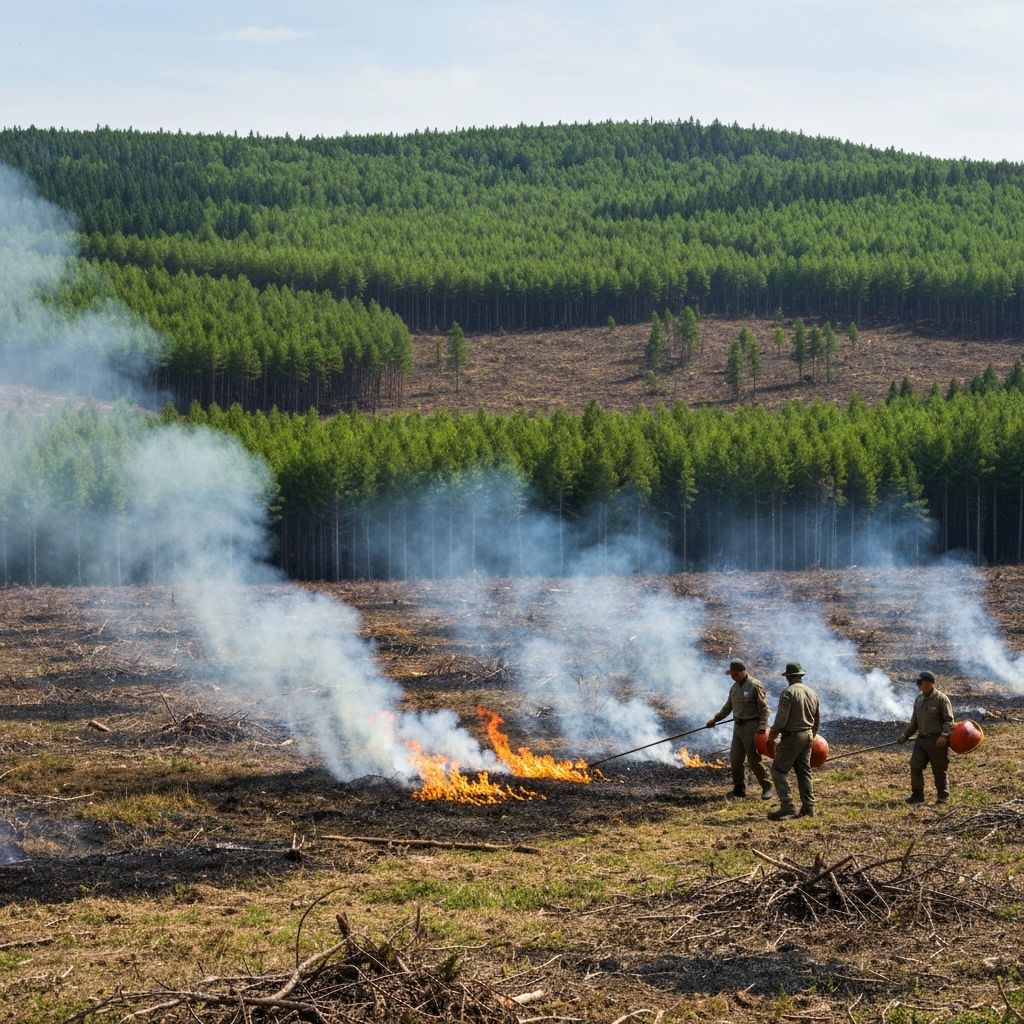
Reduce Your Wildfire Risk This Season
Byrd Land Co. provides defensible space clearing and wildfire fuel reduction for homes and acreage in Bend, Redmond, Sisters and across Central Oregon. Call or message us to get started.
Frequently Asked Questions
How far should defensible space extend around my home?
Oregon State Fire Marshal guidance describes zones extending out to at least 100 feet from the home. On slopes, or where vegetation is dense, that distance often needs to be greater, particularly on the downhill side.
Does defensible space make my home fireproof?
No. Defensible space reduces the chance that fire, heat and embers reach your home and gives firefighters a safer place to work. It works best combined with home hardening, such as ember-resistant vents and a clean roof and gutters.
Do I have to remove all the junipers on my property?
Not necessarily. The goal is spacing and separation, not bare ground. Many properties keep healthy, well-spaced trees, limbed up from the ground, while removing small trees, brush and ladder fuels between and beneath them.
When is the best time to do defensible space work in Central Oregon?
Late fall through spring is generally the best window for major clearing and mulching, because equipment work during peak fire season can carry spark risk and may be restricted. Light maintenance such as mowing and debris cleanup should continue through summer.
Where can I find official Oregon defensible space guidance?
The Oregon State Fire Marshal publishes defensible space guidance, and Deschutes County's Project Wildfire program offers local resources. Your local fire district can also answer questions specific to your neighborhood.