
Wildfire Protection
Defensible Spaces in Central Oregon
Protect your home, structures, and family with professionally created defensible spaces. Byrd Land Co. designs and maintains compliant defensible spaces zones that slow wildfire spread, reduce fuel loads, and give your property the best chance of survival when fire threatens.
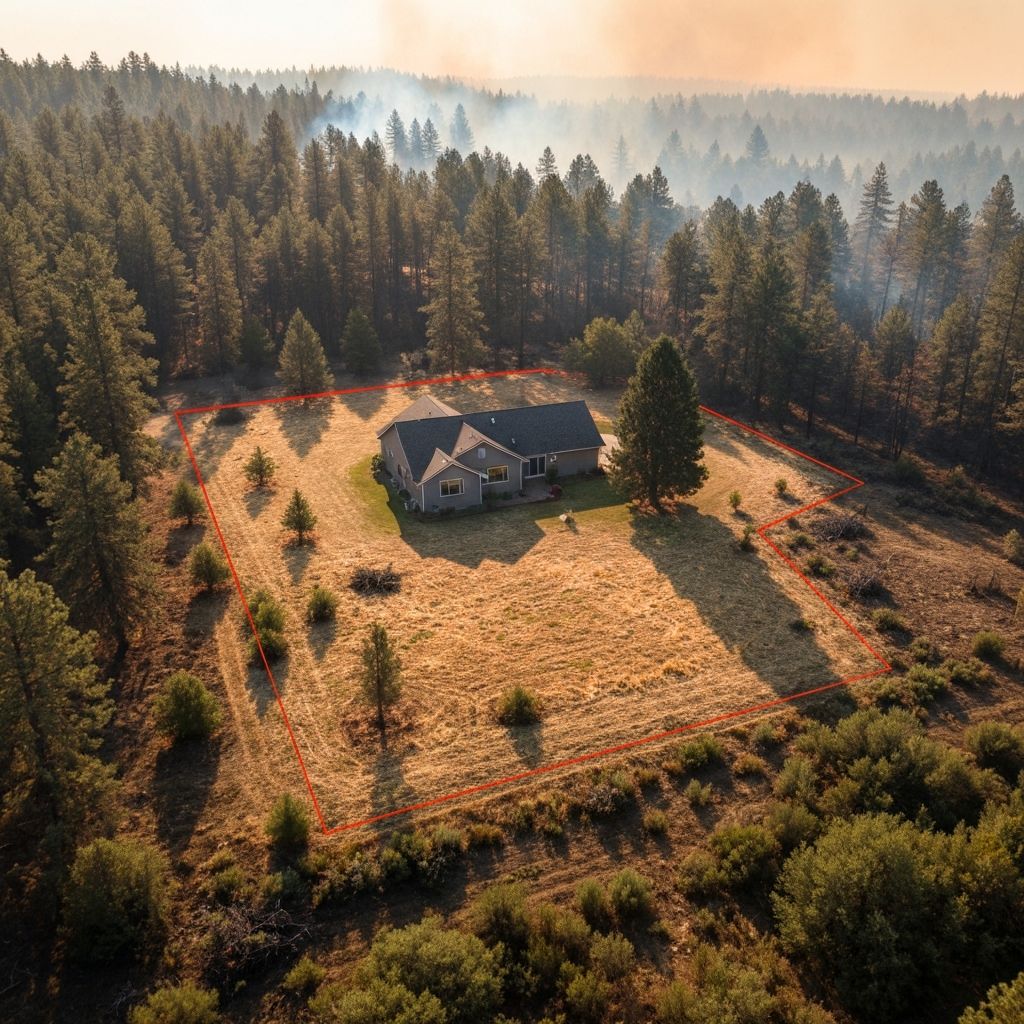
What Are Defensible Spaces?
Defensible spaces are the buffer zones created between a building and the grass, trees, shrubs, or any wildland area that surrounds it. These strategically cleared and managed spaces give firefighters a safe area to work in and protect your structure from direct flame contact and radiant heat.
In Central Oregon—where dry summers, strong winds, and dense juniper and pine forests create extreme fire risk—creating proper defensible spaces is not just a good idea. For many properties it is required by Oregon law. The Oregon Department of Forestry mandates that all homeowners in designated wildfire hazard zones maintain defensible spaces zones of at least 100 feet around their structures.
Byrd Land Co. specializes in creating defensible spaces that are both compliant and sustainable— protecting your property while preserving the natural character of your land.
A critical — and often overlooked — part of defensible space creation is proper disposal of cleared vegetation. Accumulated burn piles and slash piles inside a defensible zone are a compliance violation and a direct fire hazard. Byrd Land Co. handles all debris removal mechanically, eliminating the need for brush burning or an Oregon burn permit as part of your defensible space project.
The Three Defensible Spaces Zones
Effective defensible spaces are built in distinct zones, each with specific vegetation management requirements tailored to distance from the structure.
Zone 1 — Lean, Clean & Green
0–30 feet from structures
The most critical of all defensible spaces zones. All dead or dying vegetation is removed, combustible materials are cleared, and plants are spaced to eliminate fire ladders. This zone must be maintained year-round.
Zone 2 — Reduced Fuel Zone
30–100 feet from structures
The second of the defensible spaces zones focuses on reducing fuel continuity. Trees and shrubs are thinned and spaced, grass is kept low, and ladder fuels are eliminated to slow fire spread toward the structure.
Zone 3 — Firebreak & Perimeter
100+ feet / property boundary
The outer defensible spaces perimeter creates a strategic buffer. Firebreaks, shaded fuel breaks, and access roads are constructed to stop advancing fires and provide emergency vehicle access.
Our Defensible Spaces Services
Creating and maintaining defensible spaces requires more than a one-time pass with a mower. Byrd Land Co. delivers a comprehensive defensible spaces program tailored to your property's size, terrain, and specific fire risk factors.
- ✓Zone 1 & Zone 2 Defensible Spaces Creation
- ✓Brush, Bush & Vegetation Removal
- ✓Tree Spacing, Limbing & Pruning
- ✓Ladder Fuel Elimination
- ✓Fuel Load Reduction & Chipping
- ✓Burn Pile & Slash Pile Removal
- ✓Firebreak & Shaded Fuel Break Construction
- ✓Safe Burning Guidance & Burn Permit Compliance
- ✓Annual Defensible Spaces Maintenance Programs
- ✓Oregon ODF Compliance Documentation
- ✓Property Fire Risk Assessment
Every defensible spaces project begins with a site assessment to identify your highest-risk fuel sources and structure vulnerabilities. We then develop a phased plan to achieve full compliance and maximum protection.
Why Central Oregon Trusts Byrd Land Co. for Defensible Spaces
Not every contractor understands defensible spaces. Byrd Land Co. is built for this work.
Oregon Compliant
Our defensible spaces work meets all Oregon ODF and state fire agency requirements, giving you documentation that satisfies compliance inspections.
Wildfire Protection
Properly maintained defensible spaces dramatically increase your structure's survival odds by slowing flame spread and reducing radiant heat exposure.
Local Expertise
We know Central Oregon's high desert terrain and fire risk. Our crews understand the specific vegetation, wind patterns, and wildfire behavior unique to this region.
End-to-End Service
From initial assessment through clearing, chipping, and annual maintenance, we handle every aspect of your defensible spaces program.
Related Services
Defensible spaces work is most effective when combined with a comprehensive land management strategy. Byrd Land Co. offers complementary services that reinforce and extend the protection of your defensible spaces zones.
Brush Clearing
Remove dense undergrowth and hazardous vegetation within your defensible spaces zones.
Forestry Mulching
Efficiently clear fuel loads across large defensible spaces areas while returning organic material to the soil.
Fire Prevention
Comprehensive wildfire mitigation services that go beyond defensible spaces to protect your entire property.
Land Clearing
Full-scale land clearing for properties that need significant vegetation removal before defensible spaces zones can be established.
Defensible Spaces Service Areas
Byrd Land Co. provides defensible spaces services throughout Central Oregon
From the Blog
Land Clearing & Fire Mitigation Cost Guides
Expert pricing guides on land clearing, tree removal, forestry mulching, and excavation costs in Central Oregon.
Cost Guide
How Much Does Land Clearing Cost?
2026 pricing guide for land clearing per acre in Central Oregon.
Cost Guide
Forestry Mulching Cost Per Acre
Per-acre rates ($1,500–$3,500), hourly costs, and pricing factors.
Cost Guide
Tree Clearing Cost Guide
Pricing by tree size ($150–$3,000+) and hourly rates.
Cost Guide
Excavation Cost Guide
Basement excavation cost, per cubic yard rates, and project types.
Testimonial
What our clients say about us
Our clients trust us to manage their projects with care, precision, and integrity.

"We hired Byrd Land Co. to update our family ranch so that we could have more area to entertain, ride horses, and hunt. Scott started out by surveying the area with a drone, then we sat down and selected areas to clear for access roads and paths. He removed a ton of brush and helped us reduce the risk of wildfire spreading throughout our property, making it more safe and fun to enjoy on our horses and UTV's."
— John W.