
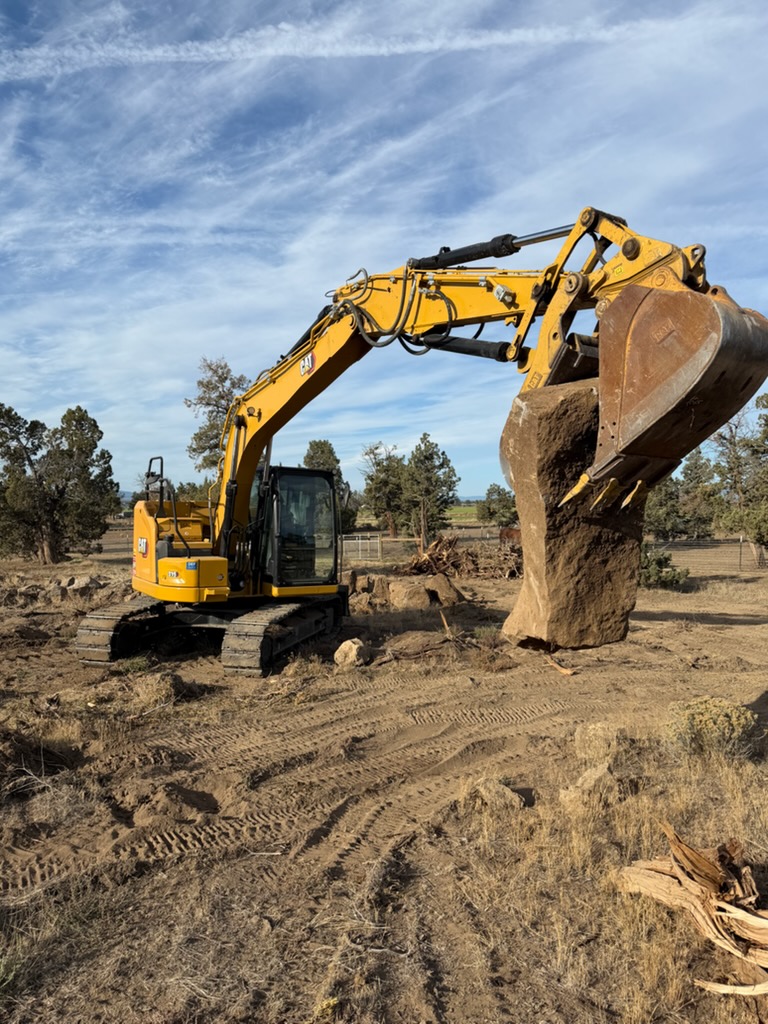
Buying raw land is the easy part. Turning a parcel covered in juniper, sagebrush and rock into a level, stable, accessible homesite takes planning and the right sequence of work.
This guide walks through how land is typically prepared for a new home in Central Oregon, what to do before you contact contractors, and where Byrd Land Co. fits in. For details on what we handle, see our site preparation services.
The Land Preparation Sequence
Every lot is different, but most Central Oregon homesites follow roughly this order. Your builder, designer and local permitting office will shape the details.
| Step | What Happens | Who Typically Handles It |
|---|---|---|
| 1. Planning | Survey, zoning and setbacks, septic evaluation, permits | Owner, surveyor, designer, local agencies |
| 2. Access | Clear and rough in a driveway or construction road | Land clearing and excavation contractor |
| 3. Clearing | Remove vegetation, stumps and roots in the building envelope | Land clearing contractor |
| 4. Grading | Shape the site, build the pad and set drainage | Site prep and grading contractor |
| 5. Excavation | Dig for foundations; remove or work around rock | Excavation contractor |
| 6. Utilities | Trenching for water, power and other lines | Trenching contractor and utility providers |
Step 1: Clearing Vegetation
The building envelope, driveway and any utility routes need to be cleared down to soil, with stumps and roots removed so they don't decay under structures or pavement. Outside those areas, many owners choose selective clearing or forestry mulching to keep healthy trees and reduce wildfire fuels.
Planning clearing with wildfire in mind from the start is much easier than retrofitting later. See our defensible space guide for how vegetation around a new home should be laid out, and land clearing for how we approach this stage.
Step 2: Access and Driveways
Construction crews, concrete trucks and delivery vehicles need a stable route onto the property. A rough access road is often built early, then finished later. Your local fire district may also have access requirements for driveway width and turnarounds, so check before finalizing the route.
Step 3: Grading and Drainage
Grading shapes the ground so the building pad is level and compacted, and so water moves away from the future foundation. Central Oregon gets relatively little rain, but snowmelt and summer thunderstorms can still send water toward structures on poorly graded sites.
Good grading also reduces long-term erosion on loose volcanic and pumice soils. Our site prep and grading work focuses on leaving a stable, construction-ready pad.
Step 4: Excavation and Rocky Ground
Excavation covers digging for foundations, removing large rocks and stumps, and moving soil to match the site plan. In many parts of Central Oregon, shallow basalt and large boulders are the biggest variable in excavation time and cost.
Planning for rock
Test digs, nearby construction and your septic site evaluation can give early clues about what is below the surface. Building some flexibility into your budget and schedule for rock is wise. Learn more on our excavation services page or in our excavation cost guide.
Utilities and trenching
Water, power and communication lines usually run in trenches from the road or well to the home. Oregon law requires notifying Oregon 811 at least two business days before excavating so existing underground utilities can be marked. We also offer trenching services for these runs.
Permits and Professional Requirements
Permit requirements depend on where your property is and what you are building. In general, expect to deal with some combination of the following:
- Building permits through your city (Bend, Redmond or Sisters) or county
- A septic site evaluation and septic permit for properties without sewer access
- Land use review for setbacks, zoning or special areas such as floodplains or wildlife areas
- Wildfire hardening building requirements in some areas
- Fire district requirements for driveway access
Deschutes County Community Development is a good starting point for unincorporated properties in Deschutes County. Always confirm current requirements with the agency that has jurisdiction over your lot before work begins.
What Byrd Land Co. Handles
Byrd Land Co. focuses on the groundwork that gets a homesite ready for your builder. Based on our current services, that includes:
- Land clearing, brush clearing and forestry mulching
- Excavation, including stump and rock removal
- Site prep: grading, compaction, drainage and building pads
- Trenching for utility runs
- Defensible space work around the future home site
House construction, septic system installation, well drilling, surveying and engineering are handled by your builder and the appropriate licensed professionals.
Site Preparation Checklist for Landowners
Before You Contact a Site Prep Contractor
- Get a current survey and confirm property corners
- Know your zoning, setbacks and where the home can sit on the lot
- Find out if you need a septic site evaluation, and schedule it early
- Have a rough site plan showing the house, driveway, shop and utility routes
- Identify trees and areas you want to keep
- Note any known wells, springs, rock outcrops or drainage paths
- Confirm your builder's schedule so groundwork is done in time
- Plan defensible space into your layout from the start
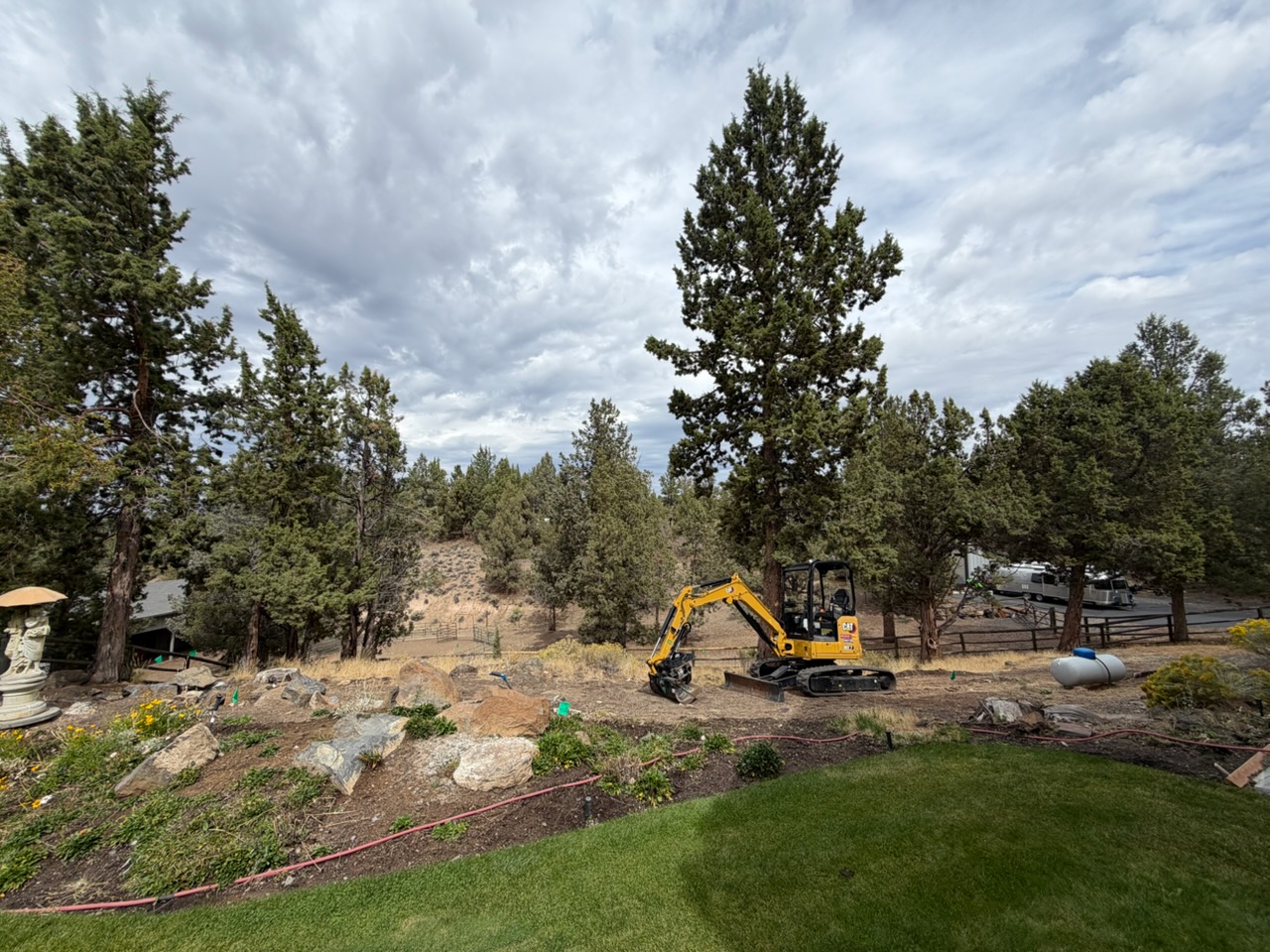
Get Your Homesite Ready to Build
From clearing to grading and building pads to excavation, Byrd Land Co. prepares building sites throughout Central Oregon. Call or message us to discuss your project in Bend, Redmond, Sisters or the surrounding area.
Frequently Asked Questions
What is the first step in preparing land to build a home?
Start with planning: confirm property lines, zoning and setbacks, and find out whether your lot needs a septic site evaluation. Physical work usually begins with clearing access and the building envelope, followed by grading and excavation.
How does rocky ground affect site preparation in Central Oregon?
Shallow basalt and large boulders are common in parts of the region. Rock can slow excavation, change foundation and utility plans, and add equipment time. A site visit helps identify where rock is likely to be a factor.
Do I need a permit for grading or excavation?
It depends on the scope and location. Building permits, septic permits and, in some cases, grading or land use approvals may apply. Check with your city (Bend, Redmond or Sisters) or with Deschutes, Crook or Jefferson County, depending on where your property is.
Does Byrd Land Co. build the house or install the septic system?
No. Byrd Land Co. focuses on the groundwork: land clearing, excavation, site prep and grading, and trenching. Your builder and licensed specialists, such as septic installers, handle their portions of the project.